What did you learn about?
I learnt about the video called "Who Moved My Cheese". I also learned that Resilience is never giving up.
Quote: "Resilience is the ability to attack while running away".
Was there anything you felt difficult to understand?
No, there wasn't anything that was hard to understand.
How did you relate to the video "Who Moved My Cheese? "
There was this person that didn't want to get out if his comfort zone. It teaches me that sometimes we need to get out of our comfort zone to try new things.
How can you apply your new knowledge to the Business Kete?
If none of the topics are in my comfort zone then I will still try it. Or if something goes wrong and the only solution is something that is not in my comfort zone then I will persevere through it and will try to do it.
Saturday, 18 August 2018

Friday, 17 August 2018
Jingle Update
What are we learning?
We are learning how to write a jingle and how to film it.
What is your job?
My job is to write a letter to our principal, make a choreography and edit the film.
How will you ensure that we are successful?
Do the jobs properly and make sure not to pass the deadline.
How does this work show my learning?
This work shows my learning because I took part in the task.
What am I wondering?
What would be the best way to manage our time?
Tuesday, 7 August 2018
Investigating Refraction- Bending Light
Aim: To investigate how light is affected by changing the substance it is traveling through.
Equipment: Ray box, power source, glass or perspex block, single-slit ray slide.
Method:
1. Collect the equipment from your teacher, and set them up to produce a single beam of light.
2. Place the glass block in the shaded area below.
3. Place your box at the top of the page and shine the beam so it travels along the 10-degree line to the center of the protractor (this is your angle of incidence).
4. Read the angle the light leaves the glass block (this is your angle of refraction).
5. Continue the investigation

Results:
10 degrees - 6.6 degrees
20 degrees - 13.2 degrees
30 degrees - 14.5 degrees
40 degrees - 25.4 degrees
Equipment: Ray box, power source, glass or perspex block, single-slit ray slide.
Method:
1. Collect the equipment from your teacher, and set them up to produce a single beam of light.
2. Place the glass block in the shaded area below.
3. Place your box at the top of the page and shine the beam so it travels along the 10-degree line to the center of the protractor (this is your angle of incidence).
4. Read the angle the light leaves the glass block (this is your angle of refraction).
5. Continue the investigation

Results:
10 degrees - 6.6 degrees
20 degrees - 13.2 degrees
30 degrees - 14.5 degrees
40 degrees - 25.4 degrees
Thursday, 2 August 2018
Observing Reflection in Curved Mirrors
 Today in Science we did an experiment using concave mirrors and convex mirrors.
Concave mirrors have shiny surfaces on the inside of the curve. One example of a concave mirror is when you look at a spoon, the bowl of the soon is concave.
Convex mirrors have shiny surfaces on the outside of the curve. An example is the back of a spoon.
 Aim: To investigate the reflection of light rays in concave and convex mirrors.
Equipment: Ray box, triple-slit ray slide, concave and convex mirrors, power supply.
Method:
1. Set up your ray box, triple-slit ray slide and power supply.
2. Place the mirrors on your book as indicated below. Place the ray box at the top of the page and shine the 3 rays of light at the mirror.
 3. Ensure that the middle ray of light is hitting the mirror at a 90-degree angle.
4. Carefully trace the direction of the three incident rays and the three reflected rays.
Results:
When the light hit the concave mirror the reflection made some sort of "X" with the lights. When the light hit the convex mirror the reflection when sideways.
Wednesday, 1 August 2018
Catchy Jingle
10 things that make a catchy single:
-You must tell the buyer why he/she should buy the product.
-Use words that will make an impact on the consumers and will make them buy the product.
-The lyrics and tune should both be simple so that they're easier to remember and hum.
-Choose words that are easy to understand.
-Repeating the words and using rhyme will make it easier for people to hum and jingle.
-Make clever use of the products name.
-If the name is too long or it doesn't fit well in the jingle, use words that will make people remember.
-Choose appropriate music so the jingle can be sung.
-It should not be too long, a 30-second jingle should be fine.
-Identify your target audience, and choose a genre that appeals to them.
-Using what's trending and popular is good too.
-Use humour.
-Use expressions according to the theme of the product.
Rating adds:
KiwiBurger: The KiwiBurger ad uses a catchy song. I especially liked the ending part, because it gets stuck in peoples head.
KiwiBurger Ad
Score: 9.5/10
 Cadbury: The lyrics and tune they used are very catchy and it will get stuck in your head. "Wouldn't it be nice".
Cadbury Ad
Score: 7.5/10

Kiwibank: Their ad was exactly 30 seconds, they use a catchy tune and they made it fun to watch so people of all ages will enjoy their ad.
Kiwibank Ad
Score: 9.7/10
 Flake Chocolate: The people in their ad used their expressions properly. Their expressions showed the audience that the chocolate is really delicious.
Flake Chocolate
Score: 6.5/10
What am I learning?
I am learning about things that make a catchy single.
How does this work show my learning?
This work shows my learning because it shows my understanding of knowing what and what doesn't make a catchy single.
What am I wondering?
Who started making catchy jingles?
-You must tell the buyer why he/she should buy the product.
-Use words that will make an impact on the consumers and will make them buy the product.
-The lyrics and tune should both be simple so that they're easier to remember and hum.
-Choose words that are easy to understand.
-Repeating the words and using rhyme will make it easier for people to hum and jingle.
-Make clever use of the products name.
-If the name is too long or it doesn't fit well in the jingle, use words that will make people remember.
-Choose appropriate music so the jingle can be sung.
-It should not be too long, a 30-second jingle should be fine.
-Identify your target audience, and choose a genre that appeals to them.
-Using what's trending and popular is good too.
-Use humour.
-Use expressions according to the theme of the product.
Rating adds:
 |
| Add caption |
KiwiBurger Ad
Score: 9.5/10
Cadbury: The lyrics and tune they used are very catchy and it will get stuck in your head. "Wouldn't it be nice".Cadbury Ad
Score: 7.5/10
Kiwibank: Their ad was exactly 30 seconds, they use a catchy tune and they made it fun to watch so people of all ages will enjoy their ad.
Kiwibank Ad
Score: 9.7/10
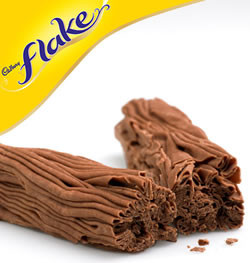 Flake Chocolate: The people in their ad used their expressions properly. Their expressions showed the audience that the chocolate is really delicious.
Flake Chocolate
Score: 6.5/10
What am I learning?
I am learning about things that make a catchy single.
How does this work show my learning?
This work shows my learning because it shows my understanding of knowing what and what doesn't make a catchy single.
What am I wondering?
Who started making catchy jingles?
Tuesday, 31 July 2018
Investigating the Laws of Reflection
Today in Science we did a practical about lights. We also learnt about reflections.
Aim: To investigate how light behaves when it hits a plane (flat) mirror.
Method:
1. Collect a ray box, power supply and single-slit ray slide from your teacher, and set them up to produce a single beam of light.
2. Place a plane mirror on the diagram of the protractor as described below.
 3. Vary the angle of incidence and record the angle of reflection in the results table.
Result:
0 degrees = 0 degrees
10 degrees = 10 degrees
20 degrees = 20 degrees
30 degrees = 30 degrees
40 degrees = 40 degrees
50 degrees = 50 degrees
60 degrees = 60 degrees
70 degrees = 70 degrees
80 degrees = 80 degrees
The angle of reflection was the same as the angle of incidence. This could because the mirror we used was just flat and it didn't have any other shapes in it.
Aim: To investigate how light behaves when it hits a plane (flat) mirror.
Method:
1. Collect a ray box, power supply and single-slit ray slide from your teacher, and set them up to produce a single beam of light.
2. Place a plane mirror on the diagram of the protractor as described below.
 3. Vary the angle of incidence and record the angle of reflection in the results table.
Result:
0 degrees = 0 degrees
10 degrees = 10 degrees
20 degrees = 20 degrees
30 degrees = 30 degrees
40 degrees = 40 degrees
50 degrees = 50 degrees
60 degrees = 60 degrees
70 degrees = 70 degrees
80 degrees = 80 degrees
The angle of reflection was the same as the angle of incidence. This could because the mirror we used was just flat and it didn't have any other shapes in it.
Tuesday, 3 July 2018
Art Reflection
What did you find most challenging about the print design process?
I found printing even quality the most challenging when I was printing. It was difficult to print it without any white marks on the print.
What did you find most challenging about the painting composition process?
The most challenging part was drawing thumbnail sketches. Sometimes I had details I wanted to draw but if I were to draw it as a thumbnail sketch then it would be difficult because then I would have to make it small. Some things are better big than small. In this case, I was better off drawing the different designs on the big piece.
What mistake did you make that taught you something?
When I accidentally cut my thumb when I was lino cutting it taught me not to put my fingers in front when I was cutting.
What was most successful about your work?
I think the most successful was when I finished both my print and painting to a good standard.
What could you do to improve your work?
I think if I had chosen better colours for my painting then it would look better. Also, if I had maybe done my printing better it would look better. My printing had a lot of white marks because the oil paint couldn't cover it. If I had rolled out the paint of my cut better then I think it would stop the white marks from coming and my print would be better.
I found printing even quality the most challenging when I was printing. It was difficult to print it without any white marks on the print.
What did you find most challenging about the painting composition process?
The most challenging part was drawing thumbnail sketches. Sometimes I had details I wanted to draw but if I were to draw it as a thumbnail sketch then it would be difficult because then I would have to make it small. Some things are better big than small. In this case, I was better off drawing the different designs on the big piece.
What mistake did you make that taught you something?
When I accidentally cut my thumb when I was lino cutting it taught me not to put my fingers in front when I was cutting.
What was most successful about your work?
I think the most successful was when I finished both my print and painting to a good standard.
What could you do to improve your work?
I think if I had chosen better colours for my painting then it would look better. Also, if I had maybe done my printing better it would look better. My printing had a lot of white marks because the oil paint couldn't cover it. If I had rolled out the paint of my cut better then I think it would stop the white marks from coming and my print would be better.
Subscribe to:
Posts (Atom)